Dental implants replace missing teeth with a titanium post placed in the jawbone and topped with a crown, so they look and work much like natural teeth. They have been in use since 1965 and suit many people who have lost a tooth to decay or injury, or who want an alternative to dentures, and a consultation shows whether you are a candidate.
What Exactly Are Dental Implants?
So what are they? A dental implant is a replacement tooth anchored in the jawbone, designed to stand in for a missing natural tooth for many years.
Unlike conventional dentures that sit on top of the gums, or dental bridges that rely on adjacent teeth for support, this solution replaces the entire structure of the tooth, from the root up to the chewing surface.
The Anatomy of an Implant
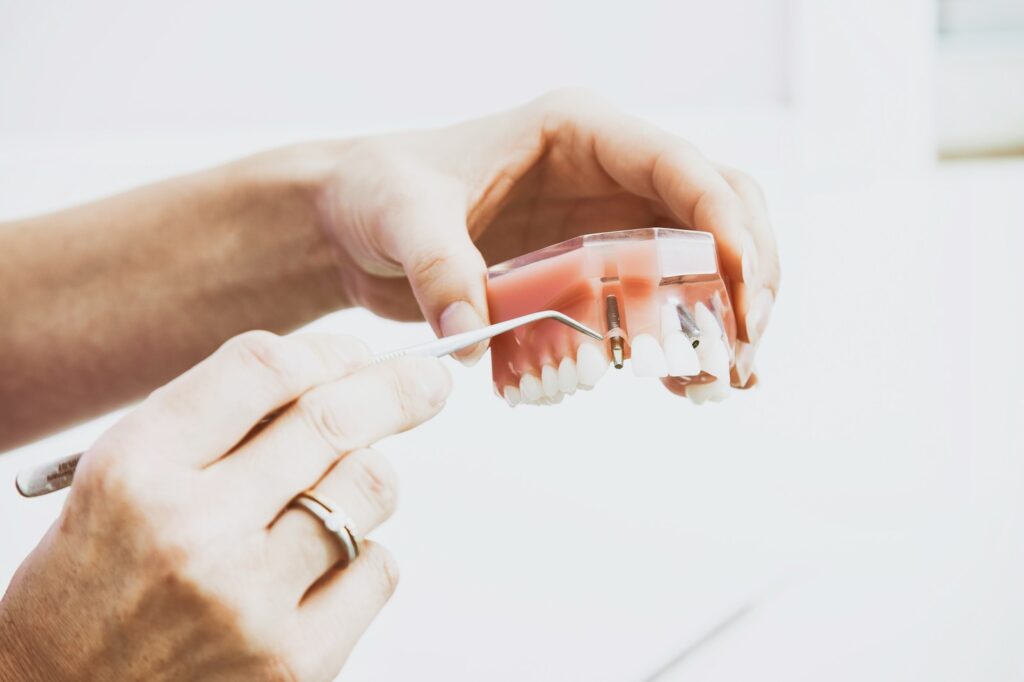
To truly understand how this technology works, it helps to break the structure down into its three primary components.
1. The Implant Post (The Root)
The initial foundation is the implant root, which closely resembles a very small screw. Made almost exclusively from surgical-grade titanium, this post is inserted directly into the jawbone. Titanium is highly biocompatible, meaning the human body accepts it naturally without rejection.
2. The Abutment (The Connector)
Once the foundational post is securely in place and healed, a tiny connector called an abutment is attached to the top of it. This piece sits just above the gum line and serves as the crucial anchor linking the hidden root to the visible tooth.
3. The Restoration (The Crown)
Finally, the visible part of the tooth is added. Depending on your specific needs, this could be a single ceramic crown, a multi-tooth bridge, or even a full set of implant-supported dentures.
Why Do People Lose Teeth?
Tooth loss is far more common than many people realize. Understanding the root cause is often the first step in creating a long-term restorative plan.
Common Causes of Missing Teeth
- Severe Tooth Decay: Untreated cavities can eventually destroy the tooth structure entirely.
- Periodontal Disease: Advanced gum disease weakens the bone and tissues supporting the teeth.
- Traumatic Injury: Accidents, sports injuries, or falls can knock out or irreparably fracture teeth.
- Congenital Absence: Some individuals are simply born missing certain adult teeth.
Are You a Candidate for Dental Implants?
Most adults who are in reasonably good general health can safely undergo this procedure. However, the success of the treatment relies heavily on a few specific biological factors.
Key Factors for Long-Term Success
To determine if this is the right path for you, your dentist will evaluate several criteria:
- Bone Density: Because the titanium post needs to anchor into the jaw, you must have adequate bone density. If you have experienced bone loss, procedures like bone grafting may be required first.
- Healthy Gums: Healthy gum tissue is essential to support the new structure and prevent future infections.
- Overall Health: Conditions like uncontrolled diabetes or heavy tobacco use can impair the body’s natural healing abilities, which may affect success rates.
The Step-by-Step Dental Implant Process
Getting a brand-new, permanent tooth is not an overnight procedure. It gets placed through several carefully calculated steps; realistically, it is a process that can take a few months from start to finish. However, the lifetime benefits far outweigh the temporary wait.
Step 1: Comprehensive Consultation and Planning
Treatment starts with a full evaluation. 3D cone beam imaging maps your jawbone, nerves and sinuses, so the implant placement can be planned precisely.
Step 2: The Surgical Implantation
The next step involves the surgical implantation of the titanium root. During this relatively minor surgical procedure, the post is carefully positioned into the jawbone. After that’s placed, the top of the post is gently covered with gum tissue.
Step 3: The Critical Healing Phase (Osseointegration)
Covering the surgical site with gum tissue is an essential phase in the process, as it enables the area to heal faster and completely undisturbed. Over the next several weeks to months, a biological process called osseointegration occurs. The jawbone actually grows around and fuses with the titanium post. This creates an incredibly strong base of support for everything else that follows.
Step 4: Uncovering and Finalizing
In the second functional step, the post gets uncovered by the dentist. An implant restoration (most commonly a custom-milled porcelain crown) is created to match the exact shade and shape of your surrounding teeth, and is firmly affixed to the abutment.
After that final appointment, you’ve got yourself a brand new, fully functional tooth!
Comparing Your Restorative Options
How does this modern solution stack up against older, more traditional methods of replacing missing teeth?
Dental Implants vs. Dentures and Bridges
Feature | Dental Implants | Traditional Bridges | Traditional Dentures |
Lifespan | Many years, often decades, with good care | 5 to 15 years | 5 to 10 years |
Bone Preservation | Yes. Stimulates the jawbone to prevent shrinkage. | No. Bone loss occurs beneath the bridge. | No. Accelerates jawbone deterioration over time. |
Impact on Other Teeth | None. Standalone structure. | Requires grinding down adjacent healthy teeth. | May cause wear on remaining teeth via clasps. |
Maintenance | Brush and floss normally. | Requires special threaders to clean underneath. | Must be removed and soaked nightly. |
Caring for Your New Smile
One of the most appealing aspects of this treatment is the ease of maintenance. While the restorations do require a little special care, it’s all easily manageable and quickly becomes second nature.
The Evolution of the Modern Smile
The concept of replacing missing teeth isn’t entirely new, but the modern iteration we know today has a fascinating history. Dental implants have changed a lot since their official debut in 1965, largely thanks to continuing, rapid advances in biocompatible materials and 3D digital design. What started as a revolutionary medical breakthrough has now become the gold standard for tooth replacement worldwide.
Establishing a Daily Maintenance Routine
All you really have to do at home is make sure you brush and floss your new tooth daily, exactly the same as you would for any other natural tooth. Using a soft-bristled toothbrush and non-abrasive toothpaste will keep the porcelain crown looking pristine and vibrant.
Can a Replacement Tooth Get a Cavity?
No. Implants are made of titanium and porcelain, which can’t decay, so an implant can’t get a cavity.
The Risk of Gum Infection
You still need to keep up your oral hygiene. If food or plaque collects around the base of the crown, it can cause a gum infection called peri-implantitis, which, left untreated, can damage the bone around the implant and cause it to fail. Regular dental check-ups and cleanings are essential for keeping implants healthy.
The Winchester Dental Studio Advantage
If you have been searching for a highly reliable dentist in Winchester, Stephens City, Stephenson City, Boyce Town, Clear Brook, Gainesboro, Hayfield, Nain, White Hall, or Round Hill, Virginia, you need a team that combines technical expertise with compassionate care.
At Winchester Dental Studio, we plan restorative treatment around your mouth and your health.
Comprehensive and Specialized Care
Every mouth is different, so we offer a wide range of care under one roof, from routine preventive care and root canal therapy to sedation for anxious patients.
Advanced Solutions for Complex Cases
For a single missing tooth, we offer dental implants. If you are missing a full arch of teeth or struggle with loose dentures, ask about implant dentures and full dental implants, which can help restore your ability to chew.
We continue to care for your oral health long after your implants have healed, so they keep working well for years.
Conclusion: Taking the First Step Toward a Restored Smile
Dental implants are a long-lasting, natural-looking way to replace missing teeth. Because an implant replaces the tooth root, it helps preserve the jawbone and lets you eat and speak with confidence.
While the process requires patience and a commitment to excellent oral hygiene, the result is a structurally sound, cavity-proof smile that can easily last the rest of your life.
Ready to Transform Your Dental Health?
Are you tired of hiding your smile? If you have any other questions about the process, recovery time, or financing options regarding tooth replacement, we are here to help.
Give our Winchester, Virginia office a call today, or schedule a comprehensive consultation with the expert team at Winchester Dental Studio. Let us help you rebuild your smile from the root up!