Keeping your toothbrush clean takes a few simple habits: wash your hands before brushing, rinse the brush well afterward, clean the holder regularly, and close the toilet lid before you flush. Your toothbrush goes in your mouth twice a day, so a little care keeps it from spreading germs.
Brushing Habits
Don’t let germs hitch a ride on your toothbrush before you even begin! Make sure your hands are clean before brushing, and rinse off your toothbrush before you put it in your mouth.
After brushing, be sure to rinse your brush carefully to get rid of leftover toothpaste, food particles, and other debris. And don’t forget to clean your toothbrush holder regularly. Talk to the doctor or your hygienist when you visit our Winchester, Virginia office for suggestions for deep cleaning brushes to eliminate bacteria if that’s a concern.
Flushing Habits
While we’re talking about germs, consider the toilet. Most toothbrushes share the bathroom with one, and every flush sends tiny particles into the air. No definite link has been shown between flushing and illness, but closing the lid before you flush is an easy way to reduce the chance of contaminating your toothbrush.
Airing? Yes!
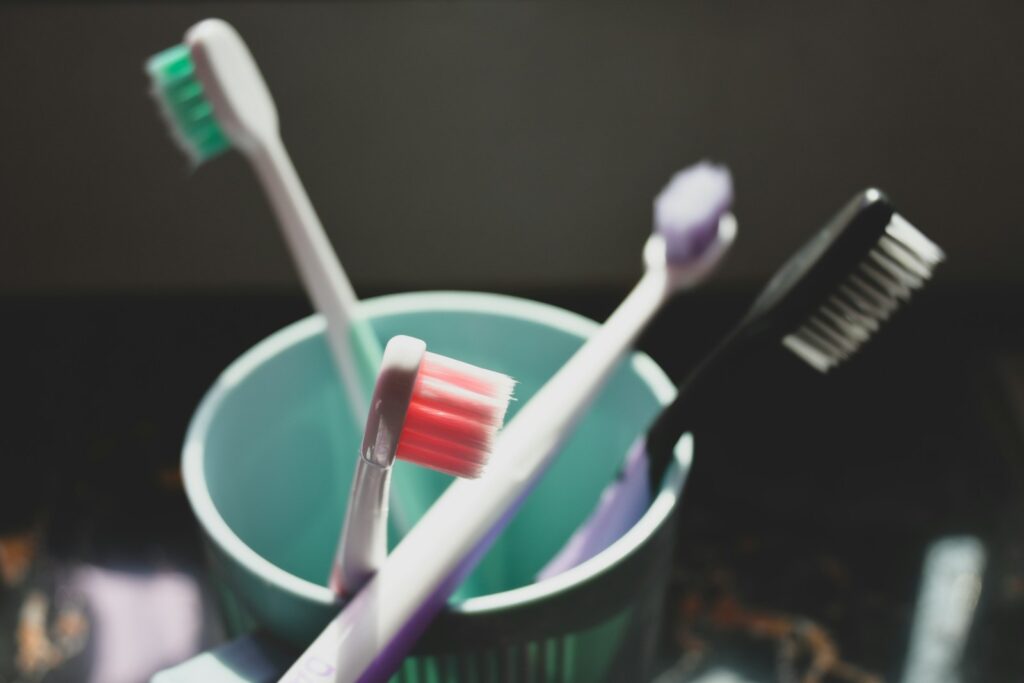
Keeping a toothbrush in a dark, moist environment is the perfect setting for bacterial growth. Instead, let your toothbrush air dry after use in an upright position. Give it a shake first for a head start on the drying process.
Sharing? No
We’re not talking about sharing a brush, which you would never do. We’re talking about sharing toothbrush holders. If your brush touches other brushes, you’re probably sharing germs as well as space, which can be especially problematic if someone in the house has immune concerns. Toothbrushes shouldn’t be too close to other toothbrushes, no matter how close you are to the other brush’s owner!
Finally, no matter how well you take care of your toothbrush, there comes a time when you must part with even the cleanest and best-maintained of brushes. After three or four months, bristles become frayed. This means you’re not getting the most effective plaque-removal from your brush. And to be on the safe side, consider retiring your toothbrush if you’ve been ill.
Keeping your toothbrush clean is a small, easy habit that supports your oral health.